Return to previous page | Return to menu | Go to next page
VRAM is a general term for the data area for storing graphic data such as scrolls. In SGL, VRAM is divided into four parts. The areas are called VRAM-A0, A1, B0, and B1, and various data related to scrolling are stored in these four data areas called banks. Since Sega Saturn's VRAM capacity is 4M bits, the VRAM capacity for each bank unit is 1M bits.
Actual drawing is performed by accessing these four data areas and reading the scroll data. The figure below shows the VRAM address.
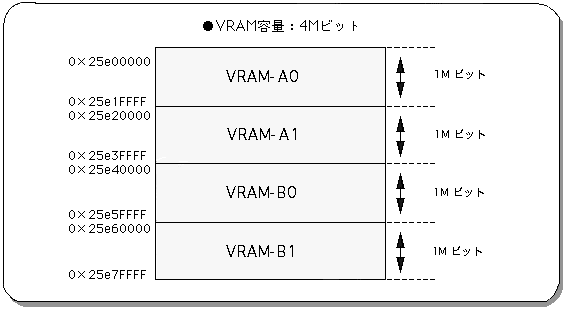
In SGL, scroll information is actually drawn on the screen by storing the scroll information in these four VRAM banks and calling them as necessary.
In the sample program, this data storage work is performed by two functions (registered in the program) called “Cel2VRAM” and “Map2VRAM”.
This function is not supported as a library function.